

It started with a simple Facebook comment:
A simple Facebook comment led to an exhibit a little under two years later. On November 16, 2023, I posted a “Throwback Thursday” on our Friends of the Chesapeake Beach Railway Facebook page. It showed a pony ride just behind the Chesapeake Beach Railway Station (today the Railway Museum) from the 1960s/1970s. The comment read: “It would be nice to see some pictures of people of color. Do you have any to share?” The post and comment can be seen below:

I answered truthfully, that like many resorts of its time, Chesapeake Beach was a segregated resort and remained so until the Civil Rights Act of 1964. That we know African Americans played an integral role in the building of the railroad and in the service industry in Chesapeake Beach, but our collections have very little supporting documentation. And that we were working to address this.
Finding a way for our museum to address this lack of representation in a more meaningful way, was a challenge with the content of our collection.
I began this project by looking at a few dates of significant events that affected African American people in the United States.

When I did the math, I realized that it was very possible that former enslaved people worked on constructing the railroad, and it was certainly likely that the children of formerly enslaved people did.
**********************************************************************************************************************************************************************
On Paper it looks “clear”
While on paper, it could seem “clear.” Slavery occurred and ended. Enslaved people gained freedom, gained citizenship, gained the right to vote. Segregation happened and ended. But that gray area in between, the reality, was muddled and far from clear.

These in-between time periods added bumps and potholes to the reality.

As I learned more and with some deep dives, it was clear that building an exhibit from our collections was not possible, and I would have to follow a different path to include this story. My research began to fall into place to show another path, which was to address the “Responses to Segregation” and to tell “An Often Forgotten Story.”
The Steamboat Industry and more

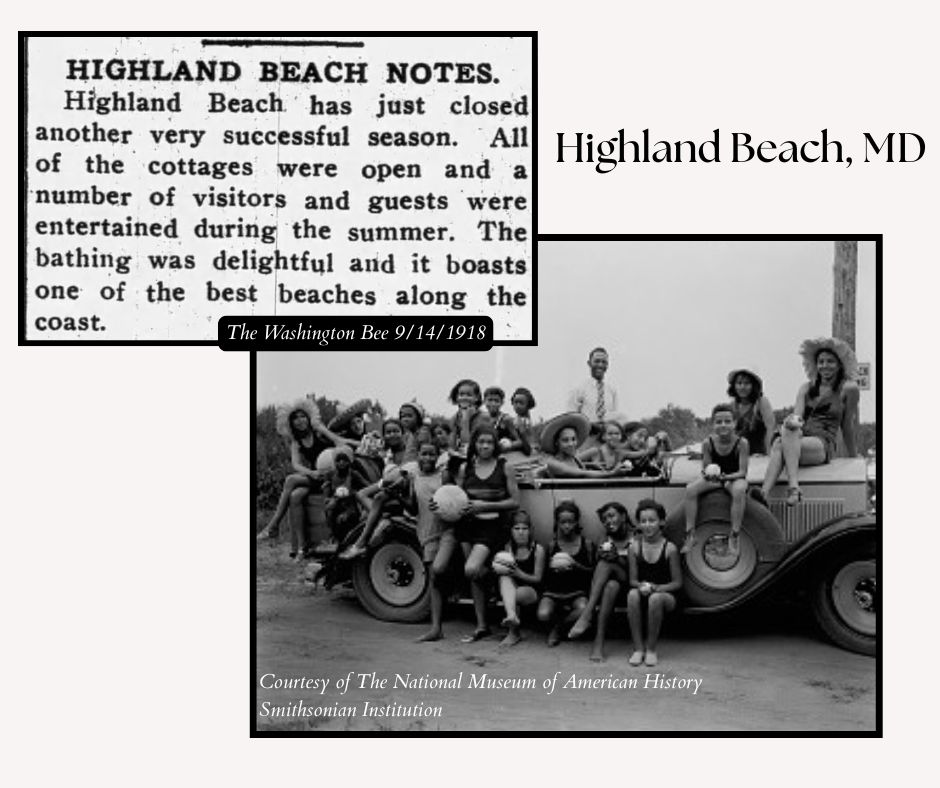
A starting point would be the Steamboat Industry, one of the first areas of recreation where African Americans could enjoy themselves away from racial tensions. This led to finding out about Lewis Jefferson, a wealthy African American businessman, who assumed ownership of Notley Park (later Washington Park, which is very close to National Harbor today). He operated steamboats to and from the resort and elsewhere, which were run by and for African Americans. There was Suburban Gardens, the first and only amusement park in the District of Columbia where African Americans were welcome. There were segregated beaches near Annapolis where well-known black musicians would play. These segregated parks and beaches offered entertainment and amusements that parallelled what Chesapeake Beach and other segregated parks offered.
Bringing this story home to Calvert County…
Albert Irvin Cassell and his proposed town

There were local happenings and recreational areas to bring this story home to Calvert County. A fascinating story I learned by visiting the Calvert County Historical Society was about Albert Irvin Cassell. He was a well-known and accomplished African American architect in the 1930s. His story was amazing, he planned and developed a self-sufficient community that was to be located near Dares Beach, in Prince Frederick, MD. His community, “Calvert Town,” was to be built by and for African Americans. He and his team included schools, stores, farms, entertainment, boardwalks, fire department… everything a community would need. It never came to fruition due to a governmental shift in the WPA loan he was hoping to obtain, as well as racial opposition to such a town being built.
Sea Gull Beach in Prince Frederick, MD

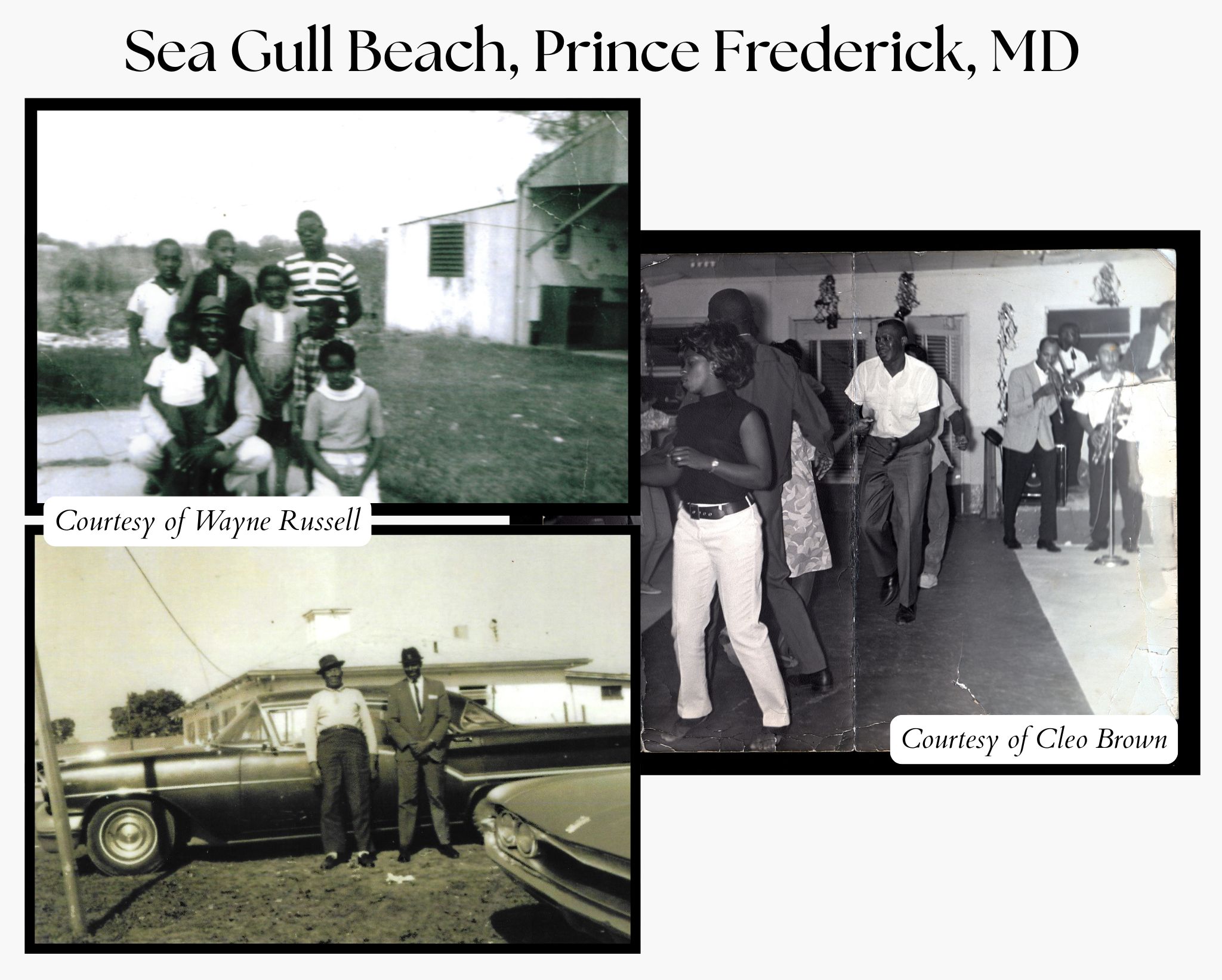
Sea Gull Beach in Prince Frederick, MD, was a local segregated beach that operated from 1956 to the early 1970s. It was a very well-known beach where popular black musicians performed, and it is still fondly remembered. I was fortunate to be in contact with Michael Kent, a local historian, who was able to obtain family photographs of the beach, including “The Hounds” house band that often played there.

To learn more about places of Black Historical Significance on the East Coast, click here!
A Realization
As my research mounted, another realization hit, that all the information collected could never fully be exhibited. Add to it the layers of deep-rooted complex history, it is difficult to grasp in its entirety, let alone display in our small exhibit space.
This exhibit was created with great thought and care, I am very proud of that. I had never fully dived into an exhibit topic such as this. It was almost 2 years of research and figuring out “how.” I wanted to tell as much of the story as possible, in a respectful and honest way, given the parameters of our small museum. I wanted to address and acknowledge segregation, and the responses to it. To share the connection of time and how we are not so far from those significant dates. And to hopefully provide insight into the broader conversation of our story as a community, and as a country.
I chose to add this new portion of our permanent exhibit and story to “The Journey” section. It seemed a logical place, both literally and figuratively.
Please do not hesitate to contact me if you have any questions or comments: kris.degrace@calvertcountymd.gov
Please visit us, we are open Daily 1:00 pm to 4:00 pm until October 31.
Resources:
“The Land Was Ours,” by Andrew W. Kahrl is an excellent history about African American ownership of beachfront properties and the development of “coastal capitalism”
- –“Historically African American Leisure Destinations Around Washington, D.C.,” by Patsy Mose Fletcher
- –“Images of America: African Americans of Calvert County,” by William Poe
- –Newspaper archives: advertisements and articles provided insight into the times and events
- –The Calvert County Historical Society
- –Museums that tell the stories, the good, the bad, and the not so pretty
Deep dives into the above resources and so many more were of great help in figuring out how to tell this story in our museum. Help from the Friends of the Railway Museum members and from staff, with reviews & edits were much appreciated.